
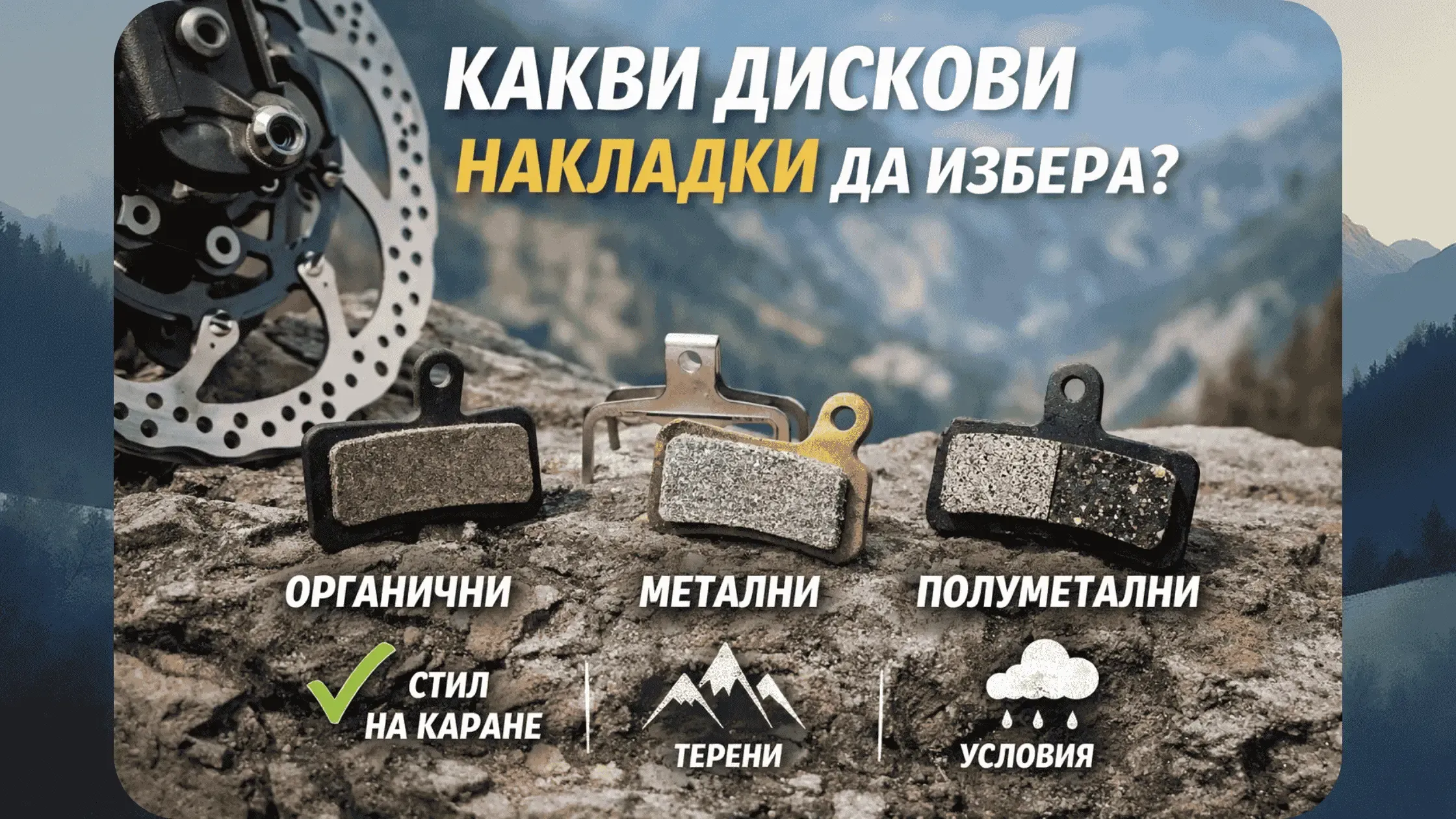
Disc brakes have long been standard on modern bikes – whether you ride mountain, road, gravel, or electric bikes. They provide stronger and more controllable braking in all conditions, but an often overlooked part of the system is precisely the brake pads.
Choosing the right type of brake pads can make a huge difference in the riding feel, braking efficiency, and component longevity. In this guide, we will explore how do disc brake pads work, when it's time for replacement and Which types are best suited according to your riding style?.
How do disc brake pads work
The disc brake works by pressing two pads against the brake rotor, which is attached to the wheel hub. When the brake lever is pressed, the pads create friction that slows down or stops the wheel from turning.
Over time, the brake material wears out, and heat and riding conditions directly affect the effectiveness and lifespan of the brake pads. That's why regular inspection and the right choice are key.
When should you replace the brake pads
The most common signs that it’s time for a replacement are:
- Reduced braking power
- Squeaking or uneven noise
- Apparently a thin layer of brake material
- Longer braking distance
If you often ride in mud, rain, or on steep descents, wear will be significantly faster.
Types of Disc Brake Pads and How to Choose
Organic (resin) brake pads
Suitable for lighter and moderate riding.
Advantages:
- Quiet during operation
- Good initial braking power
- Quick "alignment" to the rotor
Disadvantages:
- Faster wear
- Weaker performance in mud and moisture
- They overheat on long descents
They are suitable for urban riding, road bikes, and light off-road routes.
Metal (sintered) brake pads
Designed for more intense and aggressive riding.
Advantages:
- Very long lifespan
- Stable braking at high temperatures
- Excellent in wet and muddy conditions
Disadvantages:
- Louder
- More time is needed for the "break-in" period